Palmer Station, Antarctica
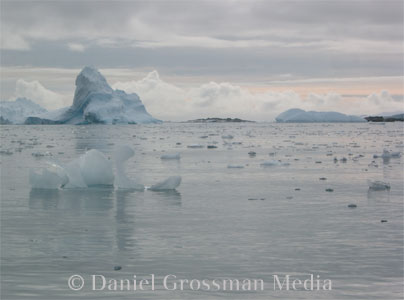
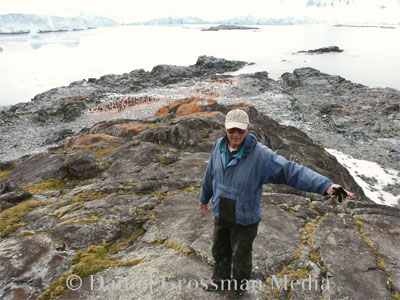
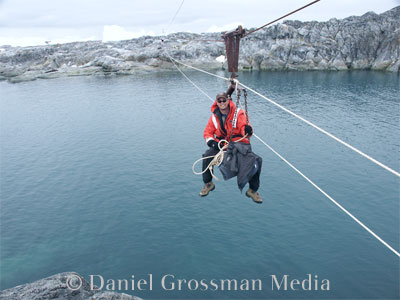
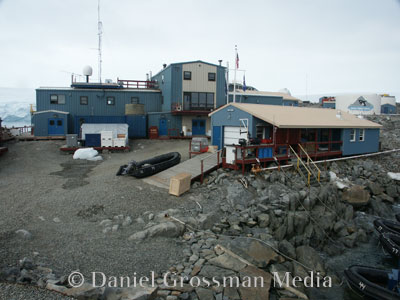
Palmer Station, one of the world’s most isolated scientific outposts, is perched between the sea and a glacier on an island off the Antarctic Peninsula, 1000 miles from the tip of South America. It takes almost a week just to get there, by ship, traveling through the Drake Passage, famous for the roughest seas in the world. During the winter the station is inhabited by a small caretaker crew. But for about six months every year the cluster of prefab blue and white metal laboratories and living quarters springs to life and becomes a world-class laboratory for research on the climate and ecology of Antarctica’s seas and shores.
Among the research projects at Palmer Station is a 30-year-long penguin study conducted by ecologist William Fraser. Fraser was told in graduate school in the 1970s that the climate was changing but that it wouldn’t have any impact in his lifetime. However, in just three decades researching birds of the Antarctic Peninsula he’s seen dramatic changes, such as melting glaciers, caused by the nearly 10-degree Fahrenheit winter warming that’s occurred there since recordkeeping began about 50 years ago, and a reduction of the annual sea ice that covers the ocean near Palmer Station, which lasts about 30 percent fewer days today than it did in the 1970s.
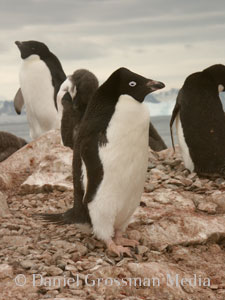
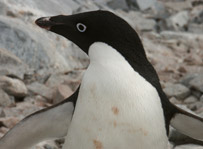
The population of Adélie penguins in the region has plummeted. Fraser remembers when the ice floes and rocky outcrops near this U.S. outpost were thick with the knee-high birds and the constant, almost deafening roar of their calls made it impossible to hold a conversation. That population has shrunk by 80 percent since he began studying it in 1974, and he expects Adélies to be extinct in the region in eight years.
What's to blame? Fraser says global warming is part of the problem because it has made it harder for the penguins to forage and breed. Adélie penguins spend 90 percent of their lives at sea, swimming or huddled on ice floes in one of the world’s harshest climates. They arrive at the islands in the area each October, soon after the snow melts during the southern hemisphere's spring. They build pebble nests big enough to cradle a basketball in colonies with up to several thousand adults.
But there is evidence that snowfall is increasing on the Antarctic Peninsula, which in the past was almost desert-like. The cause is believed to be warmer air, which is able to hold more moisture, and reduced sea ice, which permits more ocean water to evaporate. More winter precipitation means the islands around Palmer Station don’t become snow-free until later in the spring. But Adélies can’t build nests and lay viable eggs until their gravel breeding ground is bare. If the penguins wait too long to lay eggs, there won’t be enough time to raise chicks before the season for their primary food—the shrimp-like krill—ends and the penguins are forced to move for the winter.
When they do depart, the Adélies rely on ice floes, which act like moving sidewalks, helping to carry the birds to their winter feeding grounds hundreds of miles south of Palmer Station. But sea ice is shrinking, Fraser says, and the penguins don't always make it to the best places to feast on winter sites to feed on the krill that sustain them.
Another species being intensively studied at Palmer Station is the giant petrel, the largest bird in Antarctica (with a wing span of more than 6 feet). This scavenger is in serious decline everywhere in Antarctica apart from the Antarctic Peninsula. Fraser (and his wife, Donna Patterson) thinks the reason why petrels of the peninsula are being spared is because this area is not fished using long lines, which are bated cables up to 80 miles long. Petrels are an unintentional “bi-catch” of these practices.
There’s another, less exotic, but no less important species that is getting serious attention at Palmer Station. This one is a particular breed of biped found in Antarctica in small but increasing numbers: the tourist. About 15,000 tourists visit Antarctica every year, including 1,500 that stop at Palmer Station. As a matter of courtesy (and good PR) visitors are invited for tea and brownies to satisfy their curiosity about the scientists and their research. The scientists are equally curious about the tourists and, in fact, study them with the same exacting methods they might use to study laboratory mice, to determine what environmental impacts they may be causing. Tourists visiting a nearby island are observed by the scientists with binoculars to determine exactly where they tread. The moment-to-moment meanderings recorded in laboratory notebooks are later matched up with measurements made of penguin heart rates to determine the impact of the people on the birds (heart rate monitors shaped like penguin eggs are stashed in nests).
Related Links
Palmer Station, Antarctica
- Listen to The Penguin Barometer, Dan’s documentary on ecosystems impacts of global warming at Palmer Station and elsewhere
- Listen to Meltdown, Dan’s documentary survey of the impacts of global warming on the world’s ice (including impacts at Palmer Station)
- Read Colony of Antarctic penguins nears extinction, Dan’s MSNBC report on Bill Fraser’s penguin research
- Read On Thin Ice, Dan’s profile of Fraser in Audubon magazine
- Listen to Dan’s feature report on research on the impact of tourism on penguins
- View other photos of Antarctica
- Viewother photos of melting ice
PHOTO GALLERY OF PALMER STATION
- View Dan's Photographs of PALMER STATION