
Barents Sea and Svalbard
The Arctic Ice Cap is a vast frozen crust several feet thick covering much of the Arctic Ocean. Between summer and winter it varies in expanse from about the area of the continental United States to about three quarters that size. Sea ice acts like a lid, preventing evaporation and reducing precipitation. Its huge surface area plays a critical role in local, regional and global ecosystems and climate.
The Ice Cap’s area has been shrinking by about 10% per decade for the last several decades, leading many researchers to conclude that the ice cap will be gone during summers by the middle of this century. Then, at the end of the summer of 2007, the Ice Cap astounded researchers by shrinking by nearly 40 percent—3 times the size of Texas—below the long-term average. Now many researchers say it is only a matter of decades (or even a single decade) before the Arctic is ice-free in summertime.
Reduced or absent sea ice will have many serious impacts, few of which are well understood. It is expected to encourage ship traffic through the Arctic and to accelerate exploitation of its oil and other resources there. Experts say oil contamination of the Arctic is thus bound to increase. There will be important climate impacts, as vast areas of white, almost-completely-reflective ice is replaced by dark, almost-completely-absorbent sea water. Earth’s climate is largely controlled by the contrast in temperature between the hot equator and the cold poles. A darker and thus warmer Arctic will alter this system in yet-to-be-determined ways. There will also be biological changes, as the conditions suitable for Arctic species, such as summer sea-ice platforms for polar bears disappear or shrink dramatically.
- Listen to Meltdown, Dan’s radio documentary on the impact of global warming on the world’s ice
- Listen to Dan’s interview on The World from the Barents Sea
Related Links
- Listen to the portion of Meltdown that deals with research in the Barents Sea
- Listen to Polar Meltdown, Dan’s feature for the Canadian Broadcasting Corporation that deals with sea ice, including research in the Barents Sea
- Listen to Dan’s podcast for National Geographic on Zeppelin Station, the world’s most northern atmospheric monitoring site, in Svalbard
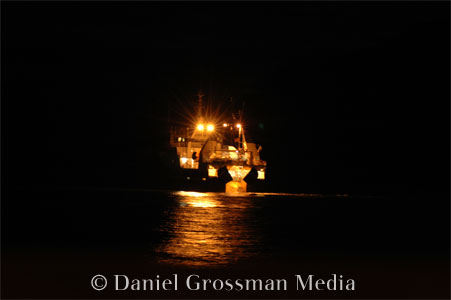
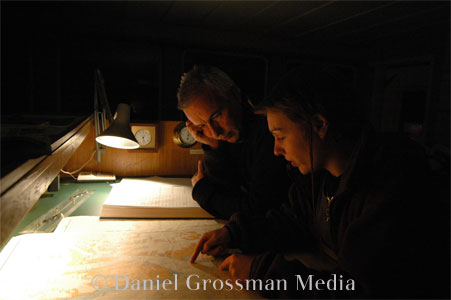
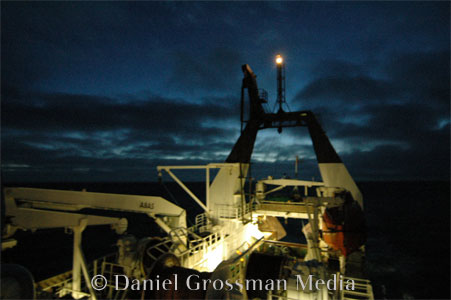
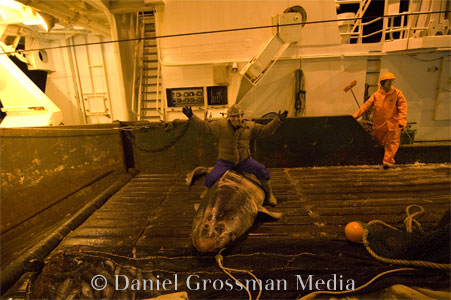
PHOTO GALLERY OF BARENTS SEA/SVALBARD
- View Dan's Photographs of BARENTS SEA/SVALBARD